A Day at Lake Kawaguchi Is Decided by Which Shore You Spend It On
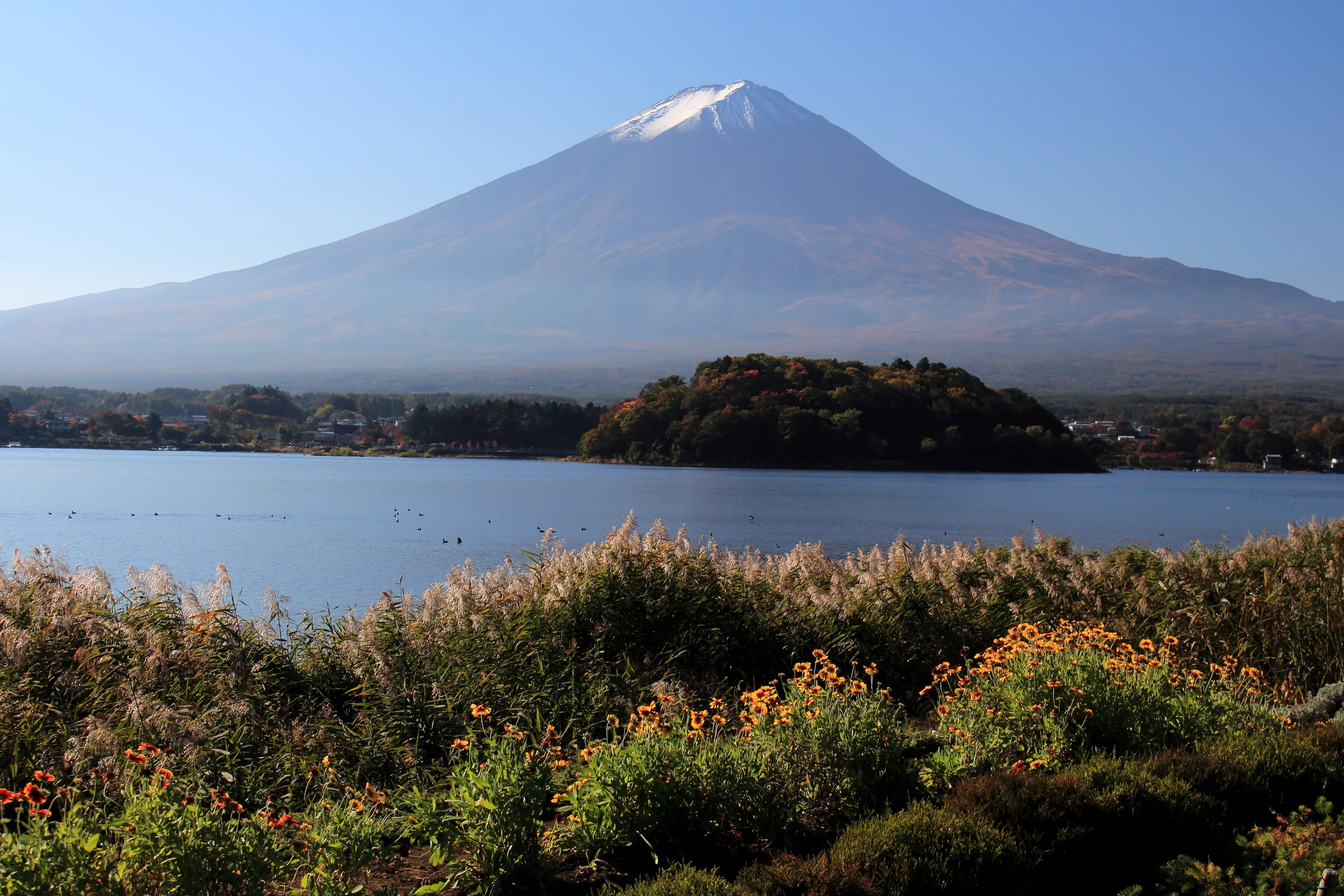
Fuji across the water is a north-shore view. The station is on the east shore

Lake Kawaguchi is long from east to west. The word lakeside therefore means different things depending on the shore you stand on. The town's landscape plan describes the lake as an east shore, a north shore and a south shore, and says the views of Mount Fuji are finest from the north. The station is on the east shore. In other words, the place where you step off the train is not the side that puts the water between you and the mountain. If you only have a day, decide which shore you will spend it on before you decide the order of anything else. What follows is the current published guidance from the town and from each facility, but it can change, so check the official pages before you set out.
On this page
- The lake runs east to west, and each shore holds something different
- The station is on the east shore, and the views are from a bridge, a cape or a summit
- To see Fuji across the water, cross to the north shore
- The south shore is not where you look at Fuji; it is where Fuji was worshipped
- In one day, cross from one shore to another only once
The lake runs east to west, and each shore holds something different
According to the town's landscape plan, Lake Kawaguchi is second in area among the Fuji Five Lakes, after Lake Yamanaka, with a long, indented shoreline running east to west. There is an island, Unoshima, out in the water. the town's landscape plan
The same document says the views of Mount Fuji from the north shore are outstanding. The character of the lakeside is also split by shore: the east is a tourist town of hotels, inns and visitor facilities; the west and south are quiet hamlets and woodland with guesthouses scattered through them; the north has few buildings and a great deal of natural waterfront.
So saying you are going to Lake Kawaguchi does not yet settle where you are going. Are you going for the view, for a meal on the busy shore, or for a walk along a quiet one? The answer decides which shore you get off at.
The station is on the east shore, and the views are from a bridge, a cape or a summit
East of the Kawaguchiko Ohashi bridge is the main tourist zone, lined with hotels, inns and souvenir shops, the landscape plan says. There are parks and a lakeside promenade along the water. the town's landscape plan
For this Funatsu and Asakawa district the plan names the principal viewpoints as Ubuyagasaki, the Tenjoyama observation deck and the Kawaguchiko Ohashi bridge. Every one of them means going out over the water or climbing above it. Standing in front of the station is not the same as seeing Fuji across the lake.
You reach Tenjoyama by ropeway. The queues and the steps are covered in a day with children.
To see Fuji across the water, cross to the north shore
Oishi Park is a lakeside park in the Oishi district on the north shore, and the tourism association says that from inside the park you can see Mount Fuji across Lake Kawaguchi. It is open at all times, entry is free, and it has no closing day. Oishi Park information
From Kawaguchiko station it is about 30 minutes on the Red Line of the Kawaguchiko sightseeing bus, and the park is right by the Kawaguchiko Nature Living Center stop. Whether a pass is worth it is set out in how to settle on one bus line.
That Nature Living Center is free to enter and opens 9:00 to 17:45 from April to September and 9:00 to 17:15 from October to March, with no closing day. The hour it shuts arrives sooner than the hour you reach the park. Nature Living Center opening hours
The museums and theatres on the north shore are there for the same reason. Writing about the Kawaguchi district, the landscape plan says they were built along this shore because of the quality of the view of Fuji across the water. For a day built around an exhibition, see the rainy-day plan.
The south shore is not where you look at Fuji; it is where Fuji was worshipped
The landscape plan describes the south shore as the lakeside tourist zone of Katsuyama and Kodachi, with lakeside parks and Fuji Omuro Sengen Shrine. It is a different place from the bustle of the east shore. the town's landscape plan
That shrine is a component part of the World Heritage site Mount Fuji. It consists of two places: the Motomiya, the original precinct at the second station on the mountain, and the Satomiya by Lake Kawaguchi, where the relocated hall now stands. Fuji Omuro Sengen Shrine heritage listing
The main hall came down to the lake between 1973 and 1974. Worship and upkeep at the second station were extremely difficult in winter, and the hall was moved to protect it permanently from that severe environment. The hall now standing at the Satomiya was rebuilt in 1612, in the precinct up on the mountain.
Go to the south shore looking for the view across the water and the day will not match the place. This is not the shore for looking at the mountain; it is the shore where the mountain has been venerated.
In one day, cross from one shore to another only once
The viewpoints the landscape plan lists are grouped by district, not strung together: Oishi Park and the Nature Living Center for the Oishi district; Ubuyagasaki, the Tenjoyama observation deck and the Kawaguchiko Ohashi bridge for Funatsu and Asakawa. They are not a sequence you walk. Change shore and you change bus line. how to settle on one bus line
Both the limited express and the highway bus home are boarded with a seat secured in advance, so your return time is fixed before you leave. Book the way back first, then subtract to see how long you really have at the lake. getting there from Tokyo
Meals are decided by the hour. Most udon shops open only at midday, and hoto was born as an evening dish. what to eat at the lake
Whether the mountain shows itself is up to the sky on the day. The order given here is a guide, not a timetable that accounts for queues or late buses. Keep to one shore and a day is enough.
Where can I see Mount Fuji across the lake? +
From the north shore. The town's landscape plan says the views of Fuji from the north shore are outstanding, and the Oishi Park information says that from inside the park you can see Fuji across Lake Kawaguchi. From the east shore, where the station is, the water is not between you and the mountain.
Can I not see Fuji near the station? +
You can, but not across the water. For the Funatsu and Asakawa district the landscape plan names Ubuyagasaki, the Tenjoyama observation deck and the Kawaguchiko Ohashi bridge as the main viewpoints. Each one means going out over the lake or climbing above it.
Can I do both the north and the south shore in a day? +
We would not advise it. Each shore is served by a different bus line, and the journey back and forth eats the day. In one day, cross only once, and keep the rest for a meal and for the trip home.
Does Oishi Park have opening hours? +
The park is open at all times, entry is free and it has no closing day. The Kawaguchiko Nature Living Center beside it is free to enter and opens 9:00 to 17:45 from April to September and 9:00 to 17:15 from October to March, with no closing day.