At Lake Kawaguchi, the Udon Shops Close First
Udon was born as a lunch; hoto was born as a dinner

When you decide what to eat around Lake Kawaguchi, look at the clock before the menu. The area's two signature dishes grew up the opposite way round. Udon spread as a quick bowl eaten between shifts at midday, while hoto was the pot a family gathered around at the end of the day. Those origins still shape when the shops are open. So it is more useful to settle on what time you will be in town than on what you will order. What follows comes from official town and national sources. Opening hours and closing days for individual shops change, so check each shop's own page before you go.
On this page
The staple here was flour, not rice
Fujikawaguchiko sits on a plateau more than 800m above sea level, where dry-field farming developed instead of rice paddies. That, the town's official gourmet guide explains, is why flour-based dishes such as hoto and udon took root here. The town's gourmet guide
The same is true across Yamanashi: roughly 80% of the land is mountainous and poorly suited to rice, so wheat noodles were made as the staple instead. Ministry of Agriculture on hoto
Two noodles from the same dough, two different roles. Udon was once a solemn dish eaten at weddings and funerals; hoto was the everyday supper after a day's work. That difference still shows in the hours the shops keep.
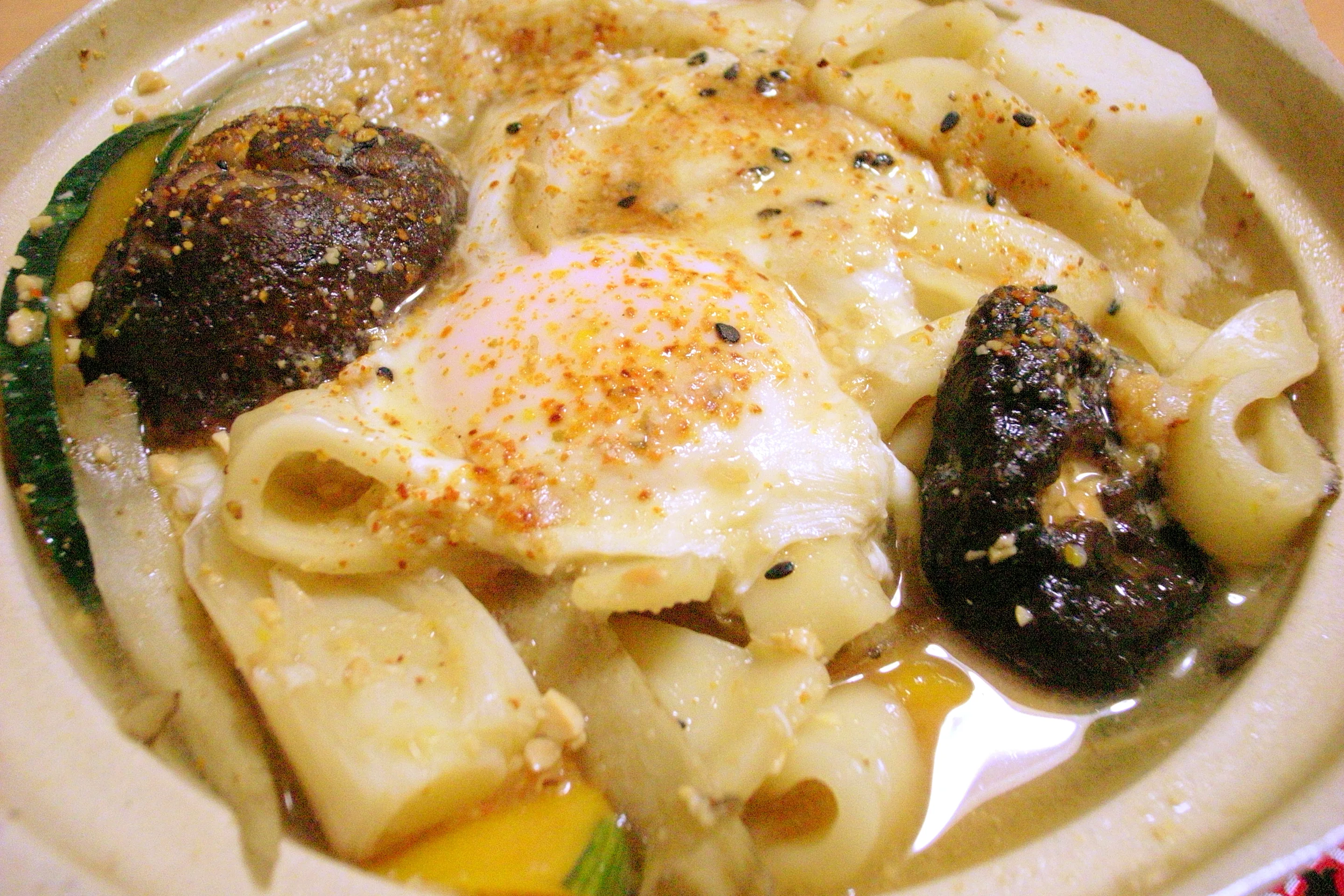
In a restaurant, hoto is simmered one portion at a time in an iron pot
Hoto is a flat noodle: wheat flour kneaded with lukewarm water, rolled out, and cut about 1 cm wide. It is then simmered with vegetables and meat in a miso-based broth. Ministry of Agriculture on hoto
Because little or no salt goes into the dough, the noodles are not especially chewy. They are simmered with the dusting flour still on them, which thickens the broth so it clings to the noodles and to the pumpkin falling apart in the pot. Pumpkin is the classic, but any vegetable or meat works, which is why the miso and the ingredients differ from shop to shop.
What matters for your plans is the wait. At home it is one big pot, but restaurants usually serve it one portion at a time in an iron pot. This is not a dish that arrives the moment you sit down. Do not squeeze it in just before your train or bus home.
Ozara, made from the same dough, is a slightly thinner noodle boiled, chilled in cold water and dipped in a soy-based broth. It is a summer way of eating, associated mainly with Kofu and Minobu, and you will not necessarily find it around the lake.
Udon was born as a midday dish
The speciality of the Fuji Five Lakes area is Yoshida udon: a firm, hard noodle in a broth that blends miso and soy sauce, topped with cabbage and meat. The town's gourmet guide
Back when textiles were the area's main industry, men made the udon so that the women could stay at the looms. They fed the family with it, and the cloth buyers who came in from the city. Households whose udon became popular converted their homes into shops. That is why the old udon shops still look like private houses from the street. Ministry of Land on Yoshida udon
The legacy of that is simple: most udon shops open only at lunchtime. In Fujiyoshida there are said to be around 50 shops devoted to Yoshida udon. If udon is on your list, put it in the middle of the day. Looking for it in the evening may come to nothing.
Each shop is proud of its own suridane, a hot condiment of ground sesame and chilli. Some keep to the older recipe and use horse meat rather than pork. The same dish name can mean quite different bowls.
The meat here starts with horse and deer
The Fuji Five Lakes area has a long culture of eating horse meat. This was a centre of Mount Fuji worship, and horses carried climbers' loads up the mountain. Butchers still sell lean raw horse, eaten at celebrations and banquets. The town's gourmet guide
Order motsu-ni, a stewed offal dish, at a local izakaya and it may well be horse offal. Many shops also top Yoshida udon with sweet-simmered horse meat and call it niku udon. If a menu just says meat, ask.
Venison is local too. To make use of deer caught within its own boundaries, the town set up a meat processing facility in 2009; it takes in roughly 150 to 200 deer a year and sells them vacuum-packed by cut to restaurants in and beyond the town. The town on its venison
So gibier on a menu here is not an ingredient trucked in from far away. The town's gourmet guide lists the shops that serve it.
Settle on the time of day before you settle on the shop
The town publishes a free gourmet guide listing its restaurants, divided into Japanese food, hoto and udon, grilled meat and Chinese, Western, izakaya, cafes, and bakeries and sweets, with maps. The hours and closing days printed in it are those of the day it was compiled, so confirm with the shop for the day you go. The town's gourmet guide
The tourism association also keeps a list of places to eat. Here too, the last check should be the shop's own page. Places to eat, from the tourism association
The natural order is udon at midday, hoto in the evening, which is the order the dishes themselves were born in. Reverse it and you may find the udon shop shut, or the wait for your hoto eating into your journey home.
If you are heading to a shop on the far side of the lake, look at the sightseeing bus times as well. On a Day Trip to Lake Kawaguchi, Settle on One Bus Line covers how to move once you leave the station.
Are hoto and Yoshida udon the same dish? +
They are different. Hoto is a wide noodle made without salt, simmered with vegetables and meat in a miso-based broth. Yoshida udon is a firm, hard noodle in a broth blending miso and soy sauce, topped with cabbage and meat. Their origins are opposite too: hoto was the family supper, udon the quick lunch between shifts.
How long does hoto take to arrive? +
It varies by shop, so no time can be promised, but restaurants usually simmer it one portion at a time in an iron pot. It does not come the moment you sit down. Avoid ordering it just before your train or bus, and set aside time for the meal in advance.
Can I eat Yoshida udon in the evening? +
You may not find any. Most udon shops open only at lunchtime, a habit that goes back to the textile era. Put udon in your midday plans.
Is there a local dish a vegetarian can eat? +
You cannot judge by the visible ingredients. Hoto broth is typically miso-based with a stock made from dried sardines and the like, and Yoshida udon comes with meat. Tell the shop what you cannot eat and ask about the stock and seasonings as well.