Home / karuizawa / itinerary
Itinerary · 8 min read

Karuizawa Itinerary: One Day, 5 Stops, Timed to Dodge the Crowd

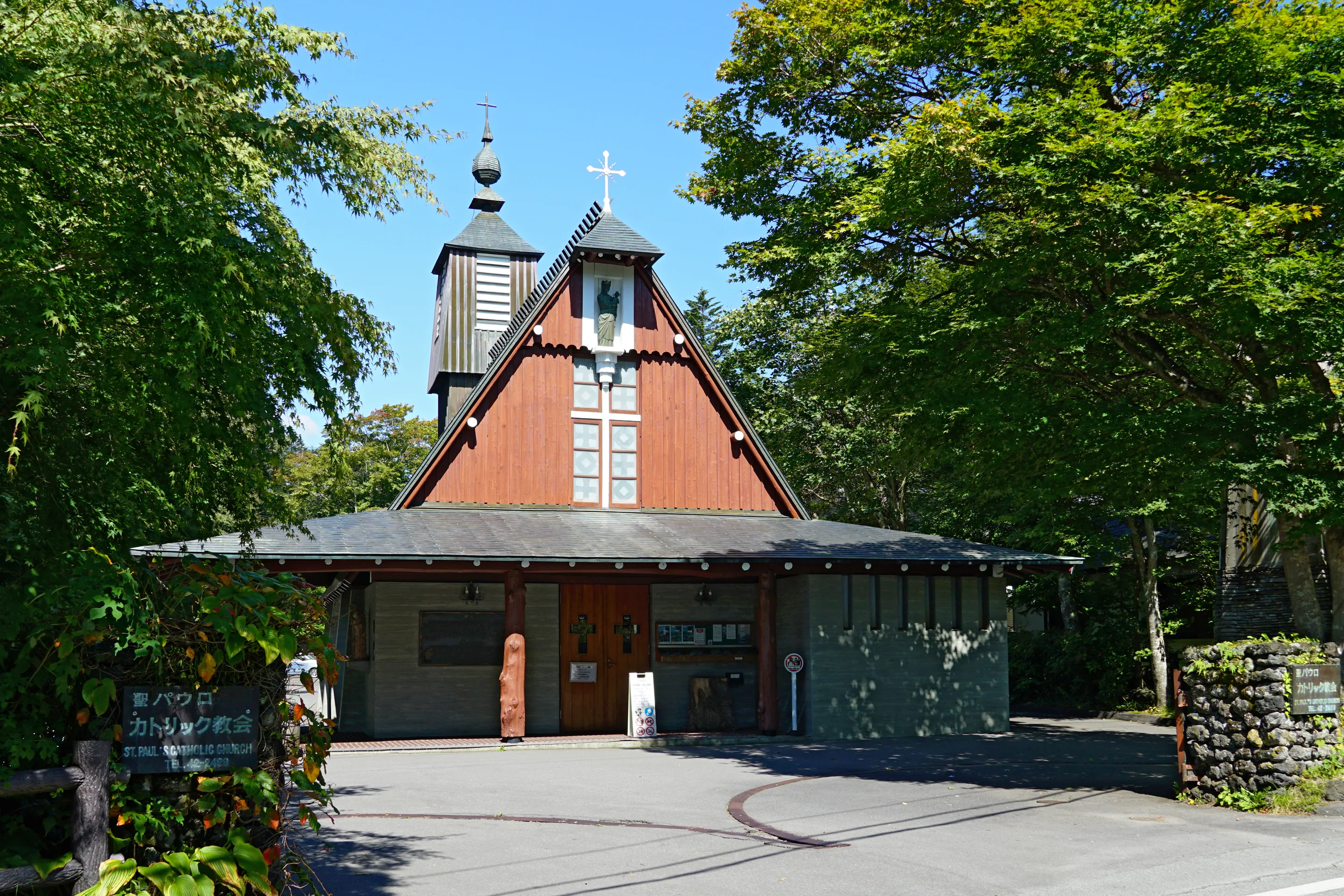
Wooden facade of St. Paul's Catholic Church in Karuizawa
On this page
  1. Time your day against the crowd
  2. Get off the train by 9, then follow the data
  3. Eat where the locals actually do
  4. Swap in a museum if you've a spare hour
  5. Work the margins of the day
From Tokyo
60–70 min, Hokuriku Shinkansen
Train
Asama or Hakutaka (not Kagayaki)
Day cost
~¥12,000 rail + ~¥5,000 on the ground
Getting around
Rental bike + bus + one local train stop
Best window
Sep weekdays; mid-Oct–early Nov foliage
Booking
None essential; reserve the train home

A mirror-still pond doubling the red maples at dawn. A waterfall that sieves straight out of the rock in silk threads. A forest onsen you can sink into while everyone else fights for the 4pm train. Karuizawa hands you all three about an hour from Tokyo — and in September, cool enough to feel like a secret you're getting away with.

Here's the catch the town's own count makes plain: 8.4 million visitors a year pour into a highland resort you can cross by bicycle in twenty minutes. They bunch up, too — the three summer months alone take over half the annual total, autumn about a quarter. So the real question a one-day plan answers isn't what to see. It's how to be somewhere else whenever the day-trippers crowd the same spot.

This route is tuned to exactly that: forest first, the famous street at its off-peak, a hot spring while the rest of the crowd queues for the train.

    Time your day against the crowd

    The crush here runs on a timetable, which is the best news you'll get all day. We checked the local traffic guides: the peak lands between 11 and 3, and it pools in just two places — the Prince Shopping Plaza outlets by the station's south exit and the Kyu-Karuizawa Ginza shopping street. Mobile-location trackers clocked something like 650,000 people in August 2025 alone; treat that figure as directional, but it matches what your feet tell you. A midday tide floods two streets and leaves the rest of the forest breathing quietly.

    Season swings it as hard as the hour. September runs meaningfully calmer than August, and up at 950 to 1,000 meters — a good 5 to 6°C cooler than central Tokyo — early autumn still feels like the reason people came in summer. Then foliage lights a second, sharper peak from mid-October to early November, two to four weeks ahead of Tokyo's color. Weigh it all and the verdict flips: the smartest single day of the Karuizawa year is a plain September weekday, not the postcard-famous October Sunday.

      Get off the train by 9, then follow the data

      From Tokyo Station the Hokuriku Shinkansen gets you in in 60 to 70 minutes — around ¥6,000 one way, and covered by both the Japan Rail Pass and the Tokyo Wide Pass. One trap swallows first-timers: the fastest Kagayaki services blow straight past Karuizawa, so board an Asama or a Hakutaka. Aim to be off the train by 9.

      In town, walk past the taxi rank. On summer and foliage weekends the two kilometers between the station, the outlets and the old Ginza street clot solid, and cabs vanish precisely when you want one. Grab a rental bicycle near the station instead — it beats anything on four wheels through the central sights, cool forest air rushing past. Save the Kusakaru Kotsu bus (about 25 minutes) for Shiraito Falls, and the Shinano Railway's single stop — roughly four minutes — for Naka-Karuizawa and the Hoshino area at day's end.

      Sanpo tip: reserve your seat home before you leave the platform. The return trains sell out on peak evenings long before the crowd starts queuing for them.

        1

        Catch Kumoba Pond before the tide comes in

        Stay 45 min

        A small forest pond a 25-minute walk — or a quick ride — northwest of the station, wrapped in a 20-to-25-minute lakeside loop. Come in foliage season and the still water doubles every momiji above it, mirror for mirror; this is the town's signature image, and it costs nothing.

        Local tip: In October, be on the loop before 9am. By late morning the path shuffles single file and the mirror surface you came for is gone.
        Bike back to the station, bus up to Shiraito Falls
        2

        Stand under Shiraito Falls

        Stay 50 min

        Not a thundering drop but a 3-meter-high, 70-meter-wide curtain of groundwater, sieving straight out of the rock face in silk threads you hear more than see. Because it's spring-fed, the water runs clear even after rain — the stop that saves the day when mountain weather turns.

        Local tip: Photograph the return bus timetable before you walk in. Services are thin, and a missed bus eats the lunch window you're trying to beat.
        Bus back toward town, then to Kyu-Karuizawa
        3

        Beat the crush on Kyu-Karuizawa Ginza — eat at 11:30, walk to the far end

        Stay 90 min

        The old main street is, honestly, part tourist strip — prices skew high and the station end is generic souvenir retail. The good stuff hides at the far, upper end: Asanoya's stone bread oven warm on the air, the church lanes, the quieter cafés a block off the drag. Sit down for soba before noon, then browse against the flow.

        Local tip: The 12-to-2 crush here is the single worst hour of your whole day. Eat early and you buy the street at its most walkable.
        Bike or train (one stop) to Naka-Karuizawa
        4

        Wander Harunire Terrace and the Stone Church

        Stay 75 min

        In Naka-Karuizawa, sixteen shops and restaurants ride timber decks threaded through a grove of around a hundred harunire elms along the Yukawa stream, the water audible under the boards. A short walk off stands Kendrick Kellogg's Stone Church — nested arches of stone and glass sunk into the forest, dedicated to the thinker Uchimura Kanzo.

        Local tip: The church closes to visitors during weddings, often with little warning. Treat it as a bonus rather than an anchor, and check same-day.
        Five-minute walk within the Hoshino area
        5

        Soak at Tombo-no-yu, then ride home

        Stay 90 min

        A source-flowing onsen open to day visitors from 10:00 to 22:00 — last entry 21:15, ¥1,350 for adults in regular season, ¥1,550 at peak periods. The outdoor rock bath opens straight into the trees; in autumn you soak with the turning canopy overhead, steam rising, while the 4pm crowd fights for shinkansen seats.

        Local tip: October evenings at this altitude slide toward single digits. Pack a layer for the walk out — post-bath, you'll feel every degree.

        Eat where the locals actually do

        The soba benchmark is Kawakamian Honten, right at the entrance to the Ginza street — 4.1 stars across some 3,400 Google reviews and a Tabelog Top-100 pick. Order the cold seiro with its duck dipping broth and eat it under a high, jazz-filled ceiling. The queue at 12:30 is the tax on that reputation; roll in at 11:30 and you walk straight through.

        Bread is the town's quieter specialty, a legacy of the foreign summer residents who settled here over a century ago. Sawamura in Kyu-Karuizawa (4.3 stars across roughly 3,900 reviews) turns out naturally leavened loaves and brunch plates, while Asanoya — baking since 1933 for that same diplomat crowd — still fires its European stone oven on the old street.

        The walk-and-eat institution is Mikado Coffee's Mocha Soft, a coffee soft-serve sold since 1969; the story goes that John Lennon, summering at the Mampei Hotel in the late seventies, was a regular. For a less touristy counterpoint, Kagimotoya by Naka-Karuizawa Station (4.0 stars, about 1,300 reviews) hand-cuts Shinshu soba. Sanpo tip: it sits right on this route's afternoon leg toward Hoshino, so you can slot the town's soba in without a detour.

          Swap in a museum if you've a spare hour

          Two swaps are worth knowing. The Hiroshi Senju Museum is a single unbroken room by SANAA's Ryue Nishizawa — the floor tilting with the natural slope, glass walls curving around planted light courts, Senju's Waterfall paintings glowing along the walls. It makes a strong rainy-day stand-in for Shiraito, though it closes Tuesdays and for the winter, so check ahead.

          The other is the Kyu-Mikasa Hotel, a pure-wood Western hotel from 1906 and an Important Cultural Property, reopened in October 2025 after a five-and-a-half-year restoration — a new second-floor café included (admission ¥1,000). It's the freshest thing in town, and most day-trippers haven't caught up to it yet.

            Doing it on rails?

            Sort the Shinkansen first

            Which pass actually covers Karuizawa, which trains stop there, and when the seats home sell out.

            Read the access guide

            Work the margins of the day

            Here's the pattern we keep circling back to. Karuizawa's whole visitor economy is built around an 11-to-3 town — the outlets, the Ginza street, the lunch queues, all tuned to a midday tide that rolls in on the 10am trains and drains out on the 4pm ones. Which leaves the margins of the day structurally underpriced.

            Kumoba Pond at 8:30 and an onsen at 6pm are the exact attractions the guidebooks list, met at maybe a tenth of the density — the whole cost being one earlier alarm and one later train. It's still a hypothesis, but in our view the town's biggest let-down — that a famous forest resort somehow feels like a shopping mall with trees — is really just a scheduling error. The forest never got crowded. The 12:40 lunch line did. Set the earlier alarm.

              Good to know

              How do you get to Karuizawa from Tokyo? +

              Ride the Hokuriku Shinkansen from Tokyo Station — 60 to 70 minutes, around ¥6,000 one way. Board an Asama or a Hakutaka; the faster Kagayaki doesn't stop at Karuizawa. Both the Japan Rail Pass and the Tokyo Wide Pass cover the trip.

              Is one day enough for Karuizawa? +

              Yes — if you're off the train by 9am and don't leave before 6pm. Kumoba Pond, Shiraito Falls, the old Ginza street and a hot-spring soak slot comfortably into that window. Stay overnight only if you also want the museums and the Usui Pass hike, or simply a slower pace.

              When should I avoid Karuizawa? +

              Skip Golden Week (especially May 3–5), Obon in mid-August, and foliage-season Sundays, when the roads between the station and the old town jam solid. Summer alone pulls over half the year's roughly 8.4 million visitors — a September weekday hands you similar weather at a fraction of the density.

              How much does a Karuizawa day trip cost? +

              Roughly ¥12,000 round-trip rail from Tokyo, plus about ¥3,000–5,000 on the ground: a rental bike, buses, a soba lunch around ¥1,500–2,500, and the Tombo-no-yu onsen at ¥1,350 (¥1,550 at peak periods). Museums add ¥1,000–1,500 each if you go in.