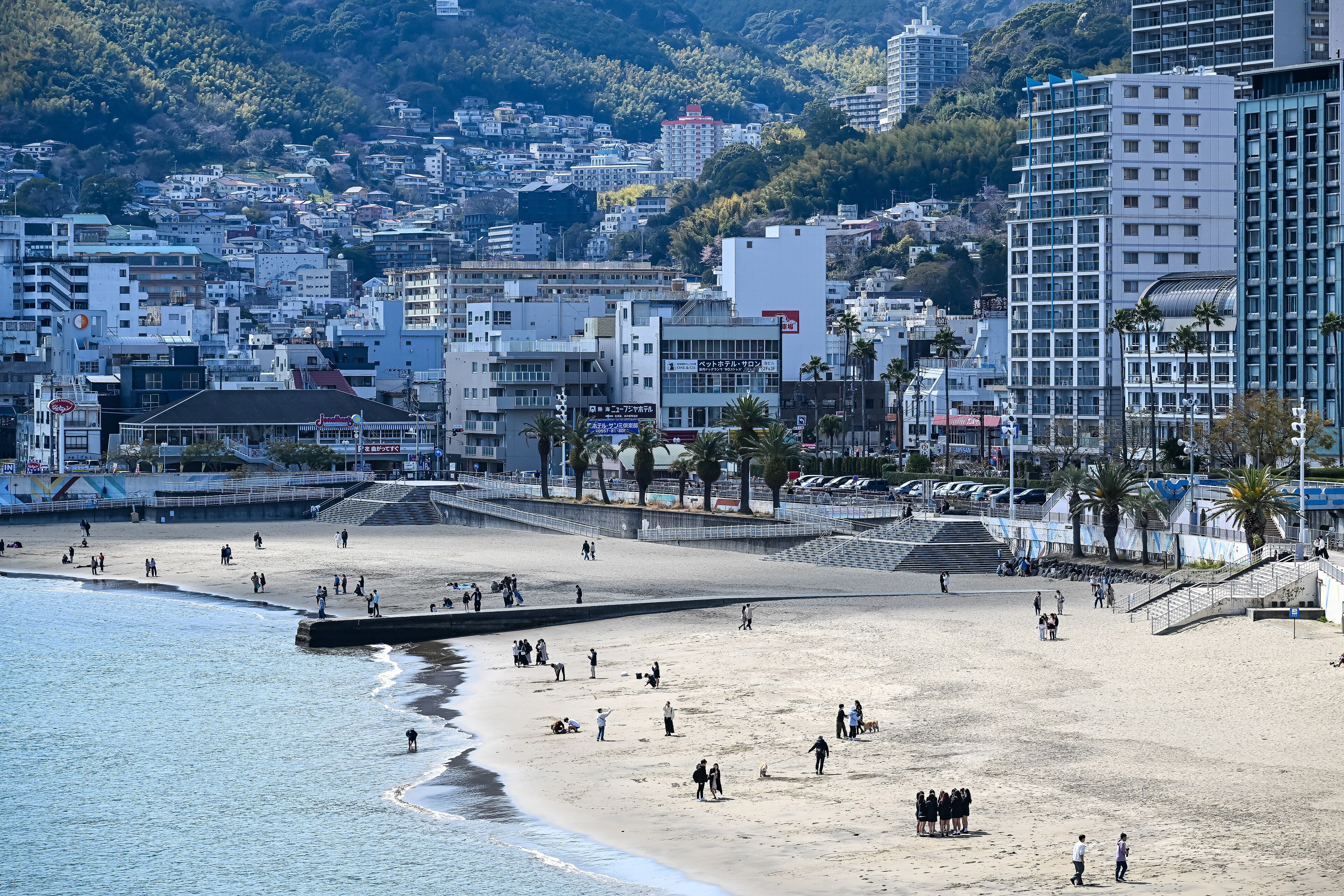
Atami: a day by the sea
From Tokyo in about 50 minutes, with time for a seaside walk and a soak

About 50 minutes from Tokyo Station by Kodama shinkansen, Atami makes an easy seaside escape without an overnight stay. With half a day, stick to Sun Beach and the shopping streets by the station. With a full day, add Kinomiya Shrine or a long soak at a day spa. The walk to the sea is downhill, so give some thought to the journey back up.
On this page
Plan the journey home
From Tokyo Station the Kodama shinkansen reaches Atami in roughly 50 minutes. Some Hikari services do not stop there, so check that the train you board calls at Atami. The conventional Tokaido Line is another option if you have more time. A seat is not guaranteed; check your arrival time and whether your chosen service requires a change.
If you plan to visit a spa, choose your return train before filling the day with stops. Allow time to change after your bath and travel back to the station.
Walk down to Sun Beach
It is a 15 to 20 minute walk downhill from Atami Station to the beach at Sun Beach, and the same road uphill on the way back. This is a town of slopes, so on a day when you would rather not add to the walking, plan around the bus or a taxi from the start.
The shopping street begins just outside the ticket gates, lined with dried-fish and confectionery shops. Eating there and then heading down to the sea is one way to shape the day. Closing days vary by shop and by weekday, so look up anything you have your heart set on.
Kinomiya Shrine is one station away
Kinomiya Shrine is about five minutes on foot from Kinomiya Station, one stop from Atami on the JR Ito Line. You can also walk from Atami Station in roughly twenty minutes, though the route has slopes.
After visiting the shrine, look for the large camphor tree in its grounds. If you would like a café break too, check the shrine’s official website for opening information.
Leave an afternoon for Fuua
If a walk by the sea leaves you wanting a slower afternoon, consider Ocean Spa Fuua. Make the spa your main afternoon stop rather than squeezing a quick bath between other sights.
Regular hours are 10:00–22:00, with last admission at 21:00. Checked on 10 October 2026, standard adult admission is ¥3,080 on weekdays or ¥3,410 on weekends, public holidays and designated dates, plus ¥150 bathing tax. Towels and indoor clothing are included. No reservation is required, but admission may be restricted when busy. Check the current rates and conditions.
Construction affects what you can use: the observation sauna is scheduled to remain closed until its reopening in mid-December 2026, and the outdoor free-flowing bath until 16 October. The outdoor standing bath and indoor view bath remain available. Standard adult weekend, holiday and designated-date admission is due to rise to ¥3,630 from the reopening date. Read the closure and price-change notice before choosing your visit date.
Children aged 0–3 and visitors with tattoos or body art are not admitted. Older children have supervision requirements and restrictions on some facilities. The free shuttle from Atami Station takes about ten minutes, but places are limited. Leave enough time on the return journey to miss one shuttle without missing your train.
Keep a half-day version in reserve
For a morning arrival and an early-afternoon departure, make Sun Beach and a meal near the station your main stops. Leave time to browse for souvenirs, and save the spa for another visit if you would rather avoid rushing.
With a full day, you could visit Kinomiya Shrine in the morning, eat near the station, then head to the seafront and Fuua in the afternoon. If the spa comes last, allow time to change and get back to the station before your train.
Can Atami be done as a day trip? +
Yes. It is roughly 50 minutes from Tokyo Station on a Kodama shinkansen, and a half day is enough to make something of it. The town is hilly, though, and changing after a bath takes time, so settle on your return train first.
Shinkansen or the ordinary line? +
Choose the shinkansen if you want more time in Atami: Kodama takes about 50 minutes from Tokyo Station. For conventional trains, check the arrival time and any changes for your chosen service. A seat is not guaranteed on ordinary trains.
Do I need to book a day bath? +
Fuua does not require advance reservations, but it may limit admission when busy. Other spas and ryokan set their own rules; check your chosen venue’s official information for booking requirements and admission hours.